

Is Monserrate Palace Even Worth Visiting? Honest Review By a Local | Sintra Proposal Photographer
Article Summary
This article offers an honest, personal evaluation of whether Monserrate Palace, one of the iconic estates and gardens in Sintra, Portugal, is still worth the visit, especially for travellers with limited time. Written by someone born and bred in Sintra with deep experience of the site, both personally and professionally.
Is Monserrate Palace Worth the Visit?
When it comes to “places you must visit in Sintra” types of lists, Monserrate Palace often times comes last, after Quinta da Regaleira, Pena Palace and even the Moorish Castle which, in my opinion, gives it an instant green flag because if it comes last then it most probably won’t be as crowded as all the other ones.
I used to be the kind of person who loved Quinta da Regaleira. I visited it a thousand times, way before Portugal was even known by the rest of the world as an independent country (not as a Spanish village), and I always told everyone that that place was the best of all the gardens and palaces Sintra had to offer. Until things changed and now, Monserrate Palace is my number one recommendation when it comes to Palaces to visit in Sintra.
My aim with this article is to give you a glimpse on what to expect and why this might be the best choice for someone who might be short on time but still wants to visit a fairytale-like place in Sintra.
What Makes Monserrate Palace So Special
Monserrate: The Gardens
The Palace in itself if pretty iconic but the gardens… Oh, the gardens are breathtaking, featuring plants and trees from all over the world.
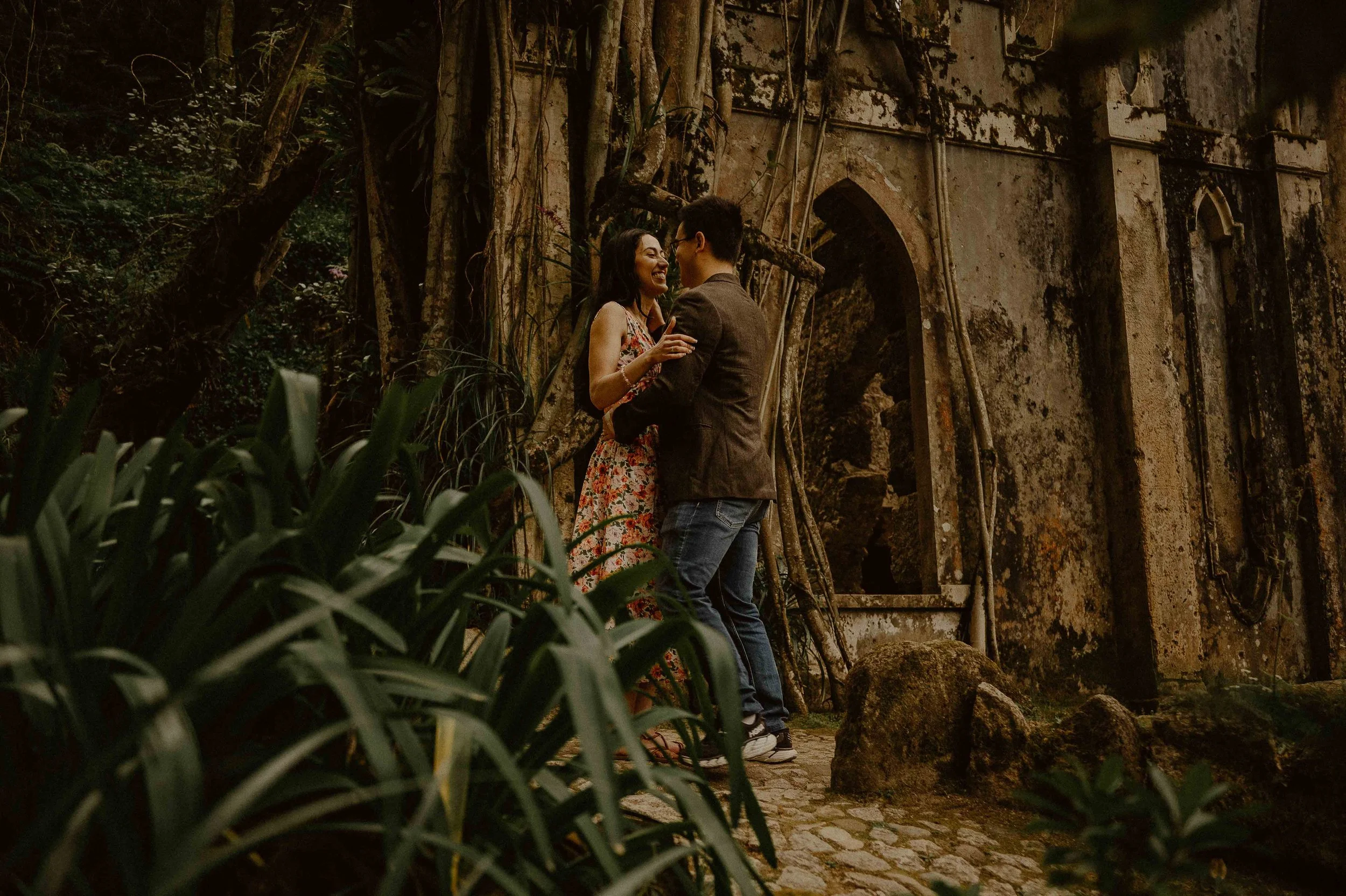
There’s so much diversity and color. You can learn about different types of plants and trees, return in different seasons and see it evolve over time, immerse yourself in different ambiances just by choosing different corners of the garden. If stillness, silence and nature is something you appreciate then you’ll certainly love it there, for sure. The best part of Monserrate is that, compared to other Palaces in Sintra, you can roam more freely in the gardens. Besides a romantic ruin and the main Palace there’s not much else to visit (architecturally speaking) so once you enter you can immerse yourself in different paths leading you through different sensorial journeys, waterfalls, ponds, plantations… Eventually, all of them will lead you to the Palace so there’s no need to “worry” about what path should you take to reach the final destination, you can just choose based on which you fancy the most instead.
It is also one of the most romantic places I’ve ever encountered. Just the ruins alone, with all that greenery breaking through the cracks makes this one of my top favourite locations for surprise proposals.Monserrate: The History
It all started in 1540, when the rector of a Lisbon (Frei Gaspar Preto) ordered the construction of a chapel dedicated to Our Lady of Montserrate.
In the 17th century, the Mello e Castro family acquired the leasehold for the Quinta de Monserrate, and in 1718, a Knight Commander of the Order of Christ and Viceroy of India (Dom Caetano de Mello e Castro) purchased the estate. Unfortunately, in 1755, the Lisbon earthquake devastated the site. Despite its destruction, the property was leased in 1789 to an English merchant (Gerard de Visme) who commissioned the construction of a Neo-Gothic style castle there, though he lived in it for only a short period of time.
In 1794, an English writer (William Beckford) became the new lessee of Monserrate. Restoration work was then carried out on the building and the vast gardens surrounding it. Sadly, the splendour didn’t last and the site fell into neglect once again in 1799, when William Beckford left the property. The lease agreement did not end until eight years later.
Despite its state of decline, the site attracts countless foreign travelers, particularly the English. It was visited by Lord Byron who expressed his love for Monserrate in the poem Childe Harold's Pilgrimage.
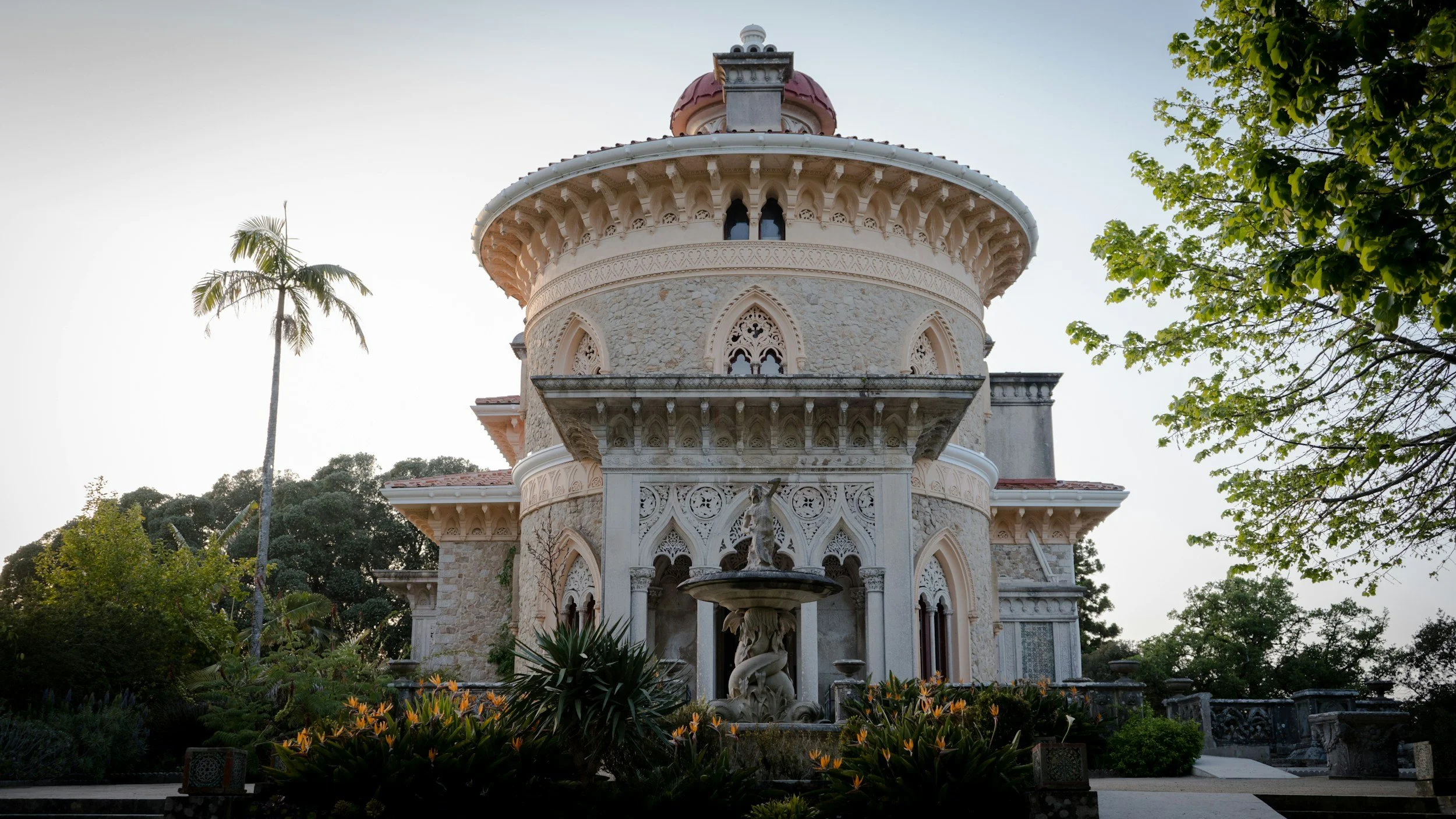
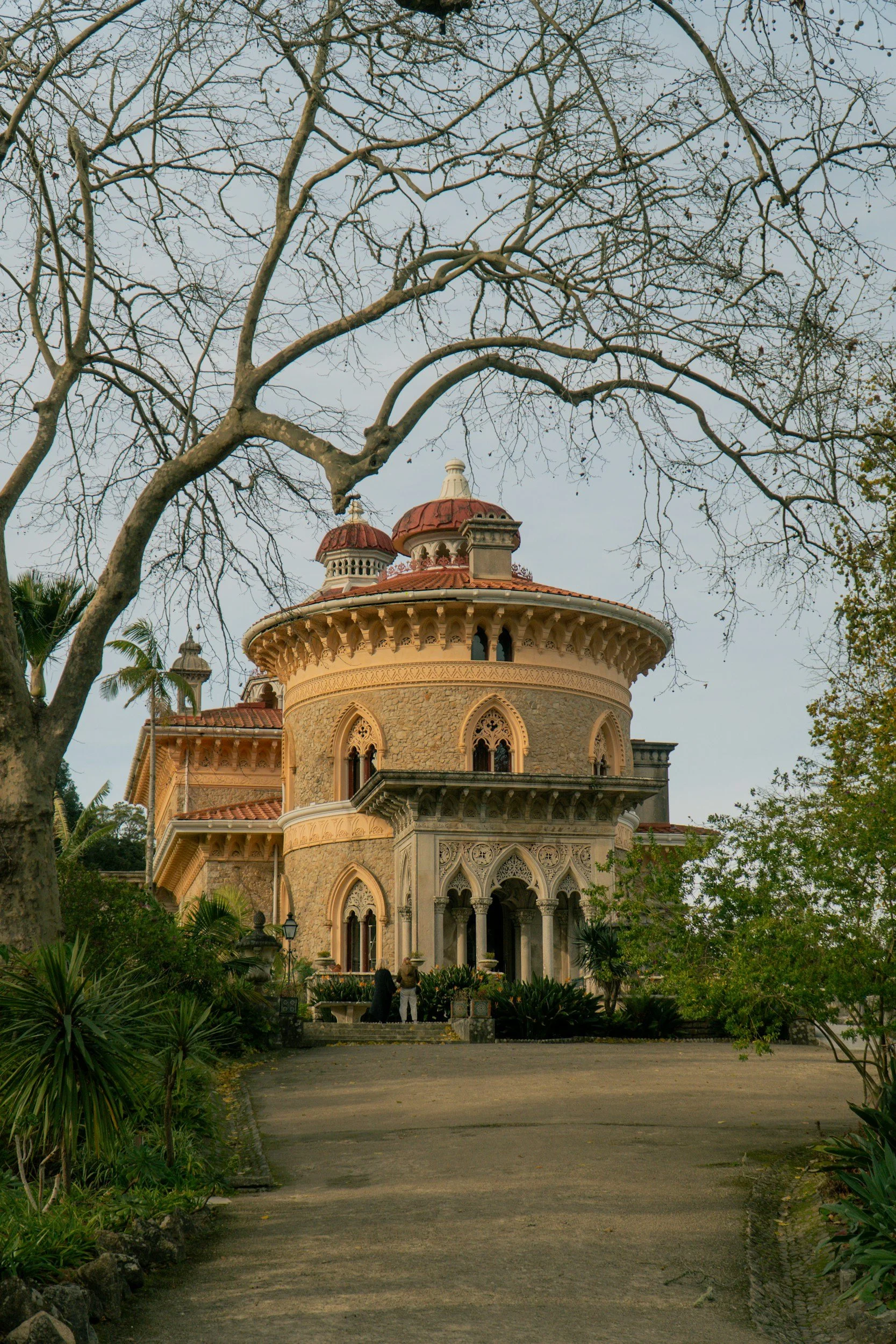
Finally, in 1863, after a succession of owners, histories, periods of restoration, and abandonment, Francis Cook, yet another English merchant and art collector, became the owner of the Quinta de Monserrate and the 1st Viscount of Monserrate. He commissioned the construction of a palace combining Gothic and Indian influences with Moorish touches. The exotic and botanical motifs of the interior décor extend harmoniously to the exterior, which was also redesigned and transformed into one of Portugal's most beautiful botanical gardens.
It was only in 1949 that the Portuguese government acquired the estate and the palace. A few years after that, the Monserrate Park and Palace were classified as a Property of Public Interest. They form part of the Cultural Landscape of Sintra, designated a UNESCO World Heritage Site in 1995.
The Park and Palace of Monserrate are part of the "European Route of Historic Gardens," which has been included in the "Council of Europe Cultural Routes" since 2020.Monserrate: The Architecture
As mentioned above, Francis Cook decided to mesh different architecture styles into the Palace which explains how different Monserrate Palace actually looks like from everything else in the area.
While surrounding Palaces stick to one single style, Monserrate gathers in one place the colors and patterns of India, the Gothic windows and the Moorish ornaments. This makes the building not just singular but also bold. It holds so many details worth noticing that one can not see every single one in just one visit.
The Not-Ideal Side of Monserrate
I’m calling it “not-ideal” because I don’t believe that any of these are deal breakers, just inconveniences.
For starters, access is not the easiest when compared to other Palaces. While you can walk from Sintra train station to Quinta da Regaleira or even hike your way up to Pena Palace or the Moorish Castle, when it comes to Monserrate Palace you can’t quite get there by foot (at least not from Sintra village). This means you’ll either need:
a) to rent a car (or request an uber/taxi/bolt/tuktuk, even) or
b) take the available buses (there are 2 that pick you up at the train station and take you straight to Monserrate)
Accessibility is another tricky thing but, to be fair, that’s something that is complicated not only in Monserrate nor even Sintra alone but throughout Portugal as a whole. Our architecture and pavements are gorgeous but they are definetely not accessibility-friendly. We still have a very (very!) long way to go when it comes to accessibility. Although Monserrate offers:
specific accessible paths throughout the gardens from ticket office to Palace entrance;
car parking spaces for persons with mobility restrictions;
staff member who’ve undergone basic Portuguese Sign Language training;
manual, folding wheelchairs (prior reservation required);
traction equipment suitable for the majority of manual wheelchairs (prior reservation required);
accessible WCs both on the interior of the Palace as well as the cafeteria.
Please read more about Monserrate’s accessibility here.
Although, generally-speaking, less crowded than other landmarks in Sintra, Monserrate can also get hectic during high season but, again, this is just less than ideal, not necessarily a deal breaker especially if we consider that the entire city of Lisbon (including Sintra) is overcrowded during high season. Having realistic expectations is important and will save you from disappointment (and this is not valid only regarding Monserrate).
Photography at Monserrate Palace and Garden: What You Should Know
Many people imagine Monserrate as a great place for photos, and it really is. However, there are a few things to keep in mind when it comes to professional photography within their premises:
Tripods are not allowed
Flash is forbidden
Authorisation fee is required to be paid at the ticket office (this fee already include up to 6 people to enter the gardens but not the Palace)
Professional photography inside the Palace itself is not allowed.
(these rules are valid for 2026; if you are reading this article after that, please ensure to inform yourself on the updated conditions)
Important note: if you’re booking a professional photographer planning to do a photoshoot at Monserrate Palace make sure this professional knows what they are doing or you might end up banned from the premises.




If meaningful photographs matter to you more than ticking off landmarks, this might resonate with you.
Is Monserrate Palace Worth It in 2026?
The honest answer: absolutely!
Monserrate Palace is worth visiting if:
You enjoy symbolic, immersive spaces
You enjoy stillness and nature
You don’t mind taking the bus or rent-a-car
It may disappoint you if:
You expect to reach Sintra landmarks solely by walking
You just want something to visit really quick (it might not be worth the extra kilometers to reach it)
You dislike crowds altogether (if you are planning on visiting during high season)
Like many iconic places, its value depends less on the location itself and more on how you choose to experience it.
A More Intentional Way to Experience Sintra
Sintra doesn’t need to be rushed. And it doesn’t need to be consumed like a checklist. In fact, Sintra invites you to act exactly the opposite. It invites you to slow down, immerse yourself in a fairytale-like village and take your time to absorb every detail.
For couples who feel drawn to places like Monserrate, Quinta da Regaleira or even Pena Palace, what often matters most isn’t how many sites they visit but how deeply they experience the one they choose to give it a go.
A Different Kind of Sintra Experience

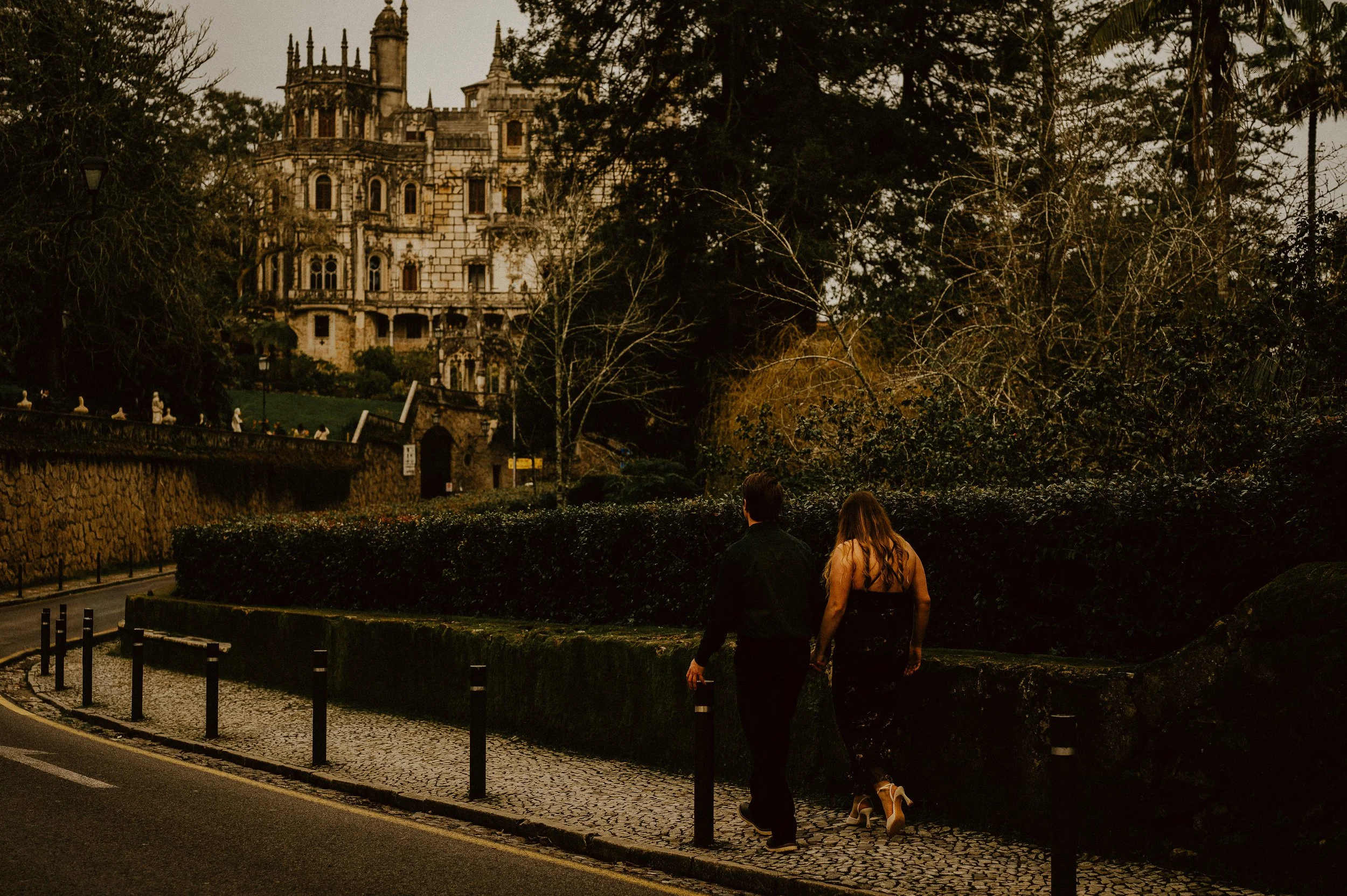




The couples who are drawn to Sintra tend to be the ones who want more from an experience than a good photo. They're curious, intentional, a little romantic in the deeper sense of the word and they want to feel something, not just document that they were somewhere.
That's exactly who I work with. My couples sessions aren't traditional photoshoots, they're experiences that combine connection exercises and creative moments with photography, designed for couples who want to slow down and actually be together, intentionally. If that sounds like you, you can read more about how I work here.
Thankfully there’s much more to Sintra than Monserrate so whether you choose to visit it or not, make sure to take some time to wander the narrow streets of what’s called “the most romantic village” in Portugal because it truly is a gem on its own.
And if you wish to live an authentic, romantic and immersive experience in Sintra with a local that knows all the hidden gems capable to transport you to a completely different time, this might be of your interest.
Final Thoughts
In my humble opinion, every landmark is still worth the visit if you go with a realistic expectation.
Little things will be the untouched fairytale we see portraied on social media, but they might still be powerful places when approached with intention. And sometimes, that intention is what transforms a crowded landmark into a personal memory.
If you’re planning a visit to Sintra and wondering how to experience it in a way that actually feels like your, this might be the right place to start.







A slow-travel guide to things to do in Lisbon as a couple, neighborhood by neighborhood, written for two people who'd rather experience a city with intention than just tick it off of a checklist.