

Things to Do in Lisbon as a Couple: A Guide for People Who Hate Travel Guides and Tourist Traps
Book your own immersive romantic photo experience in Lisbon for a one of a kind date [link]
Introduction
The best things to do in Lisbon as a couple aren't attractions at all. They're long lunches with no plan after them, a walk through Alfama with no destination, a miradouro at the hour the light turns orange, and enough unscheduled time that you actually talk to each other. If travelling for you is about connecting with another place’s culture and not just ticking instagramable places out of a list, then skip the tuk-tuk tours, pick two or three neighborhoods and live in them for an afternoon each. That's what this whole guide, written by a true local, is really about and it was written for you, the intentional, slow-traveller that prioritises meaning
You probably know the kind of trip you don't want because you have probably taken it before, perhaps even with this same person. That trip where you land, open a list of "17 Must-See Lisbon Attractions," and spend four days moving between dots on a map, mildly exhausted, taking photos of things you'll never look at again. You get home and someone asks how it was and you say "amazing" because that's the word, but what you actually remember is standing in a line for a viewpoint that had forty other people standing in it too.
Well, this is not that guide.
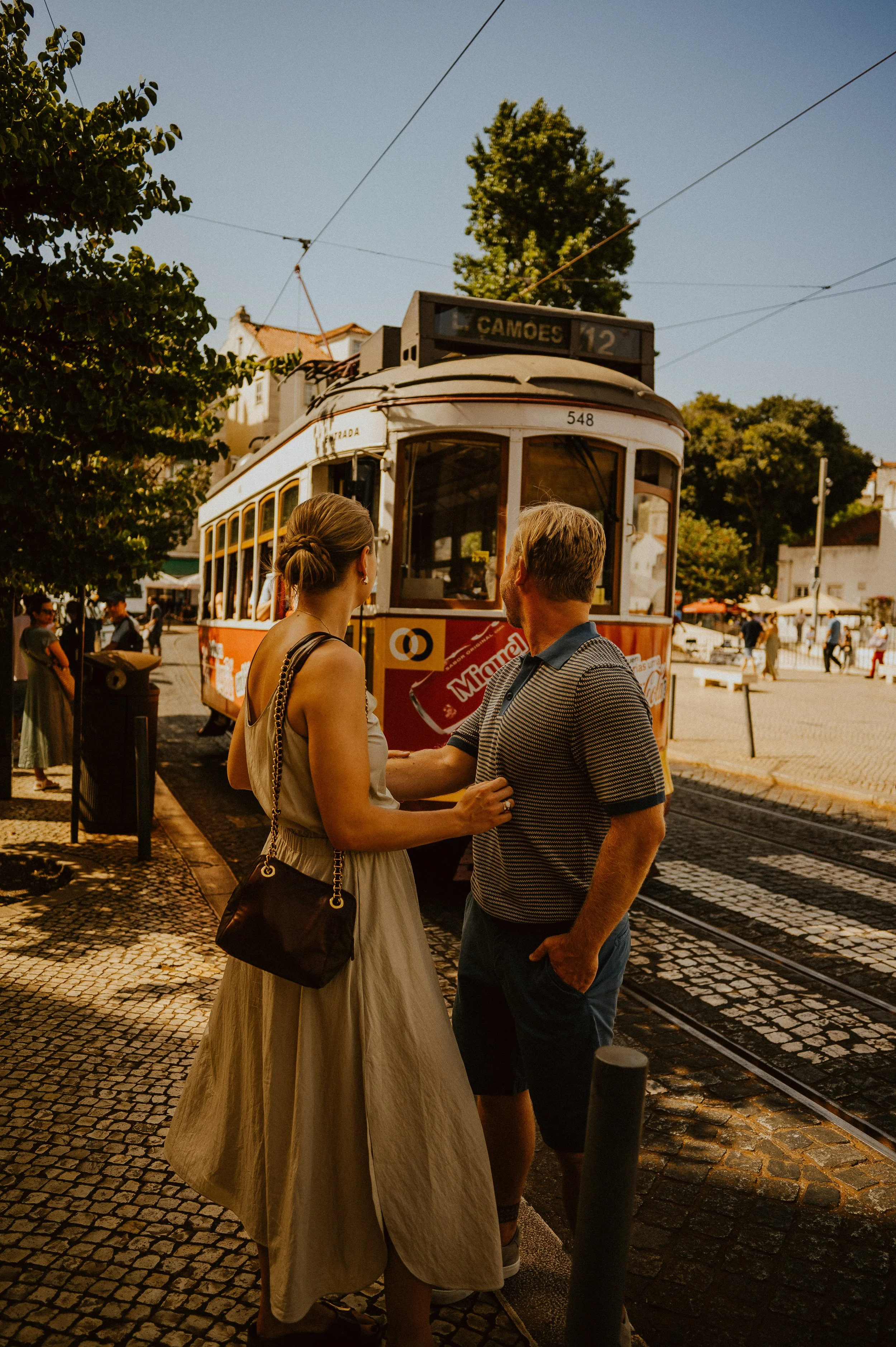
Lisbon rewards the opposite instinct. It's a city built on hills, which means it forces a certain pace on you whether you like it or not (especially under the hot summer sun). Trust me, you cannot rush uphill on cobblestones without paying for it later. In a way, the city already knows something about slowness that most guides seem eager to ignore. So instead of a checklist, here's Lisbon organized the way you'd actually want to experience it as a couple: neighborhood by neighborhood, with room left over for nothing in particular.
Start in Alfama (Without a Plan)
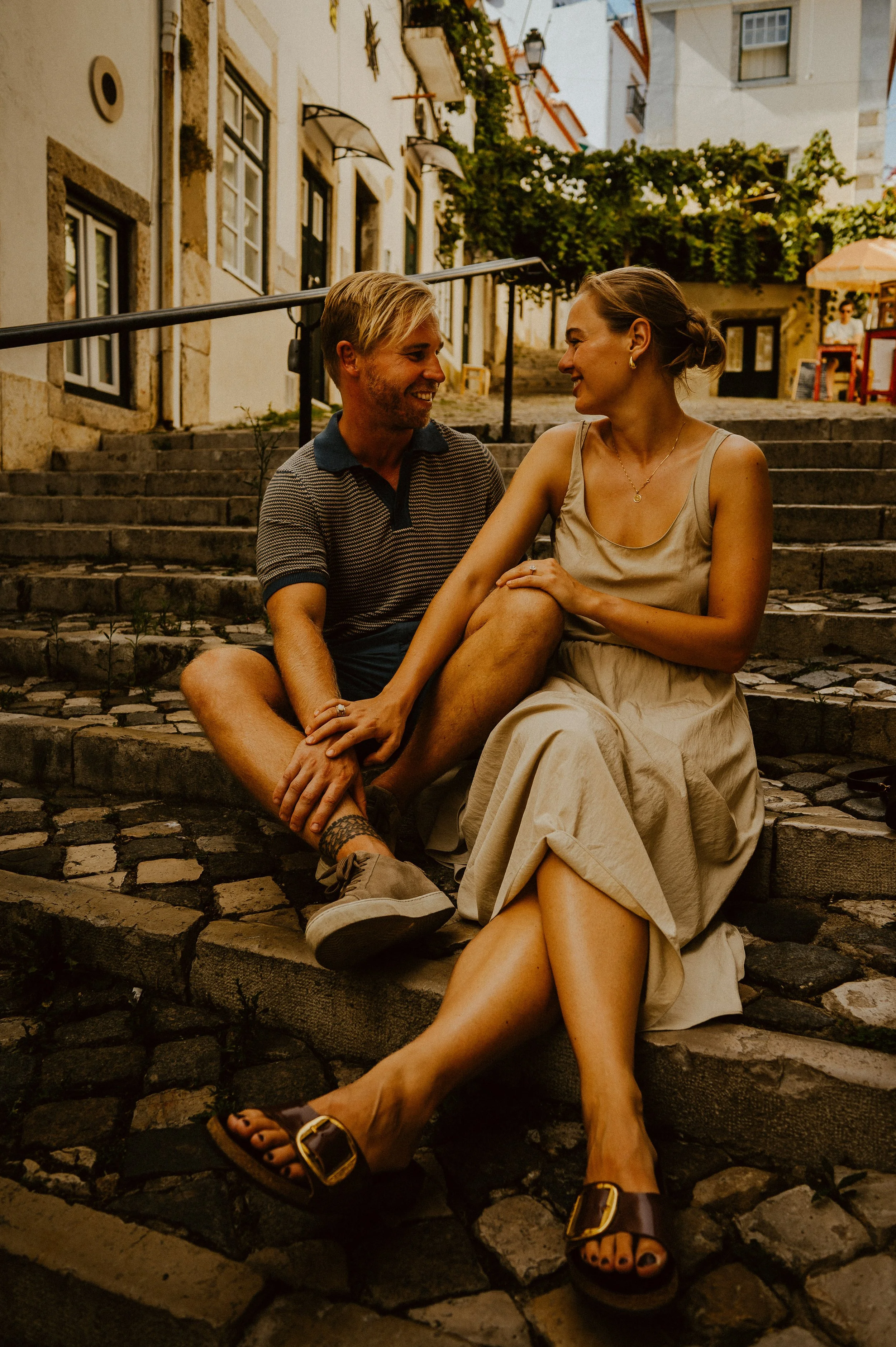
Alfama is the oldest part of the city, and it survived the 1755 earthquake mostly because its narrow, tangled streets absorbed the shock better than the grid-planned neighborhoods that came after. That's not a trivia fact for a guidebook sidebar but might be the reason the streets still don't make sense on a map. You will probably get lost in Alfama and that’s the point of exploring it. Let the neighborhood guide you through its hidden corners and immerse yourself in the sounds, smells and architecture that might transport you back to 1755 for a split second.
The version of this neighborhood most visitors get is the one with a fado dinner show and a fixed menu. I urge you to skip it. Instead, go in the late afternoon, before the tour groups arrive for the sunset crowd at Miradouro de Santa Luzia, and just walk around without looking into a map. Laundry strung between buildings, watch old men playing cards on plastic chairs outside a mercearia that's been there since before their fathers were born. A tiny tasca with four tables and no sign, where the owner tells you what's good that day because the menu changes with what they bought at the market that morning.
If you want fado (and it's worth hearing at least once) look for a place with no cover charge and no tourist menu, ask your accommodation host for a name rather than trusting whatever comes up first in search (which, most of the times, are real tourist traps).
Some golden rules to check the authenticity of a place:
if a “fado restaurant” features dishes like paella, burgers, kebabs or pizzas too, that’s how you know that that place is not authentically portuguese;
if a “chourizo assado” costs you more than 7€ or a single desert is priced above 5€ then it’s a tourist trap with inflated prices.
Príncipe Real (Perfect for People Who Read Novels on the Plane)
This is the neighborhood for the two of you if your idea of a good afternoon involves a secondhand bookshop, a garden with old trees you can sit under for an hour, and a natural wine bar where the person behind the counter actually wants to talk about what you're drinking and not just rush through your request. Príncipe Real is quieter than Chiado, less performed than Bairro Alto, and full of small, specific things: a shop that only sells vintage ceramics, a café where the pastry case changes daily, a weekend farmers market, perfect to watch and connect with locals and local producers/products.
It's also a good neighborhood for a real conversation. The pace here doesn't push you anywhere so you can order one coffee and stay for two hours and nobody will hurry you out. Príncipe Real has a rhythm of its own.
If you fancy a look over the city you can easily walk to Miradouro do Príncipe Real for a privileged view (it’s worth to go down the stairs and sit in the miradouro garden for a more private a relaxed experience). Bairro alto is right around the corner too if you wish to continue your visit that way.
Belém (But Experienced Differently)
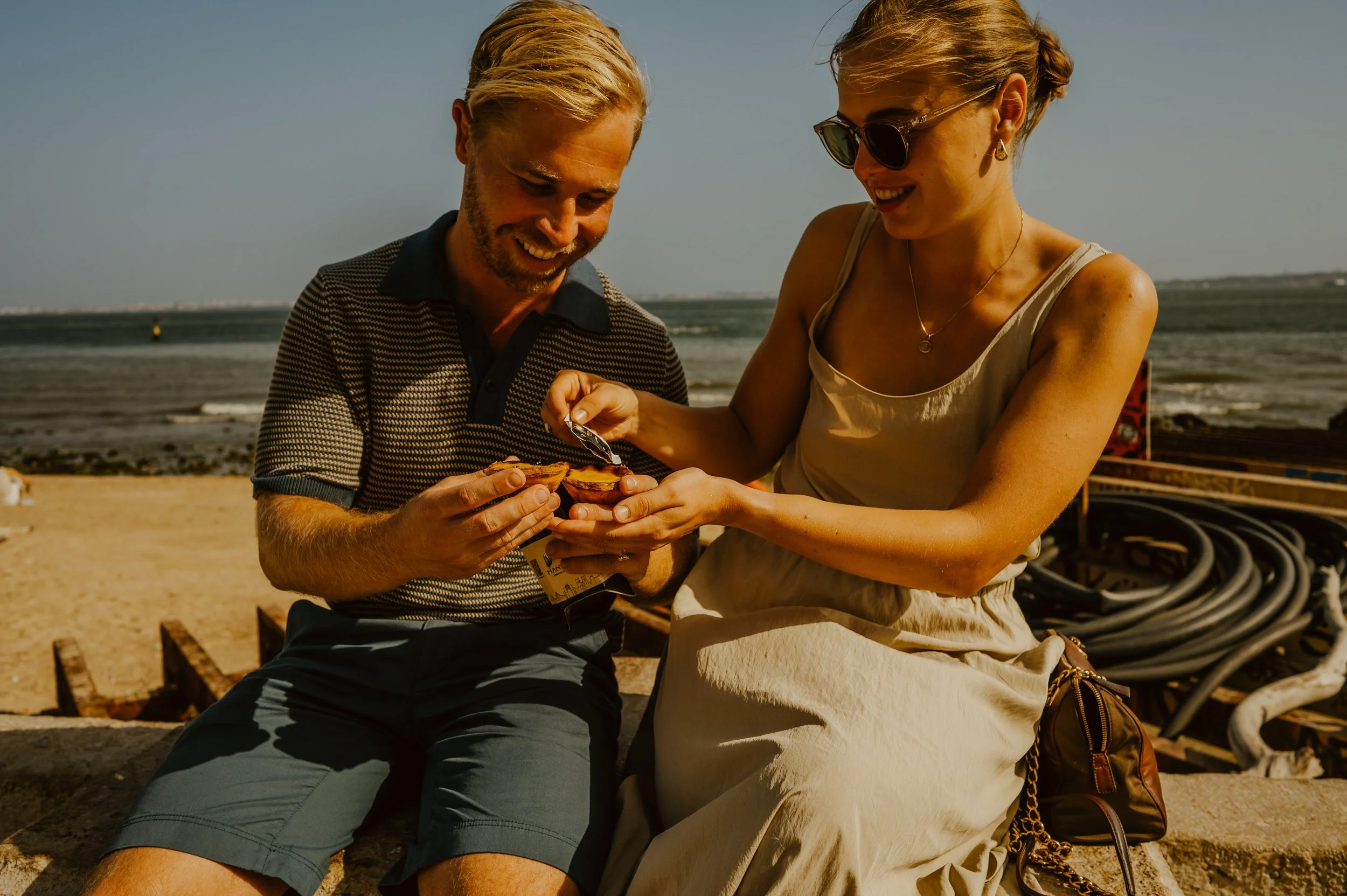
Most people do Belém as a single rushed morning: pastel de nata, tower, monastery, back on the bus. You can obviously do that too, I mean, the pastéis really are worth the queue (please make sure to go to the real and original factory where it all began and not a franchise), and the Jerónimos Monastery is genuinely stunning, not just Instagram-stunning. But if you have the time, give Belém an actual day instead of a rushed morning. Walk the riverfront path along the Tagus instead of the main road, take a sit on the grass near the river with your pastéis instead of eating them standing in line. The light off the water in late afternoon overlooking the bridge is so worth sticking around. As a photographer that has photographed in many places with different sunsets I can tell you Belém’s is honestly breathtaking.
This is also the neighborhood where Lisbon's contradictions show up most clearly: the monument to Portuguese "discoveries" sits a short walk from a river that carried ships toward colonies whose histories aren't in the plaque. Worth knowing, even if you don't dwell on it. A place is more interesting when you let it be complicated instead of just pretty and I’m sure you appreciate thought provoking monuments if you are still here!
Graça and the Miradouros (for the Golden Hour)
Graça sits above Alfama, and it has the two best sunset viewpoints in the city center without the major crowds that Santa Luzia pulls in (mind you that there will still be crowds of people — especially on high season. However, it’s considerably less crowded than Santa Luzia or Portas do Sol viewpoints).
Miradouro da Graça and Miradouro da Senhora do Monte both look out over the whole city and the river beyond it, and if you time it right (an hour before sunset, with a bottle of vinho verde from the kiosk and nowhere else to be) this is the moment most people who've been to Lisbon will tell you they remember most and it’s not just the views but the moment itself, with a stillness of its own and a magnificent view being painted in the sky right in front of you.
It's a small thing but worth planning an entire afternoon around: showing up early enough to get a low wall to sit on, watching the light change, perhaps sitting in silence for a bit. It's the kind of small thing that ends up being the actual point of the trip: relaxing and enjoying.
Cais do Sodré and the Riverfront (to Enjoy the Nightlife in a Quieter Way)
If you want an evening out that isn't a club, walk the riverside promenade from Cais do Sodré toward Time Out Market (not for the market itself, which is fine but usually super crowded) towards the strip of small riverside bars just past it where you can get a drink and watch the ferries cross to the other bank as the sky goes through every version of orange it has. Rua Nova do Carvalho, the old red-light street now painted entirely pink, has turned into a low-key bar strip that's interesting to explore too.
If you want to enjoy a louder but also interesting nightlife then go uphill to Bairro Alto where you’ll find dozens of bars and clubs to choose from. From Thursday to Saturday nights it might be extra crowded with loads of people drinking outside but it might be worth the chaos to experience something very typical (although a lot of places now are no longer portuguese-owned and might feel like tourist traps considering some prices). One bar I always recommend is Bar Cena de Copos that, in my opinion, serves the best Morangoska in town!
Turning This Into a Couple's Trip, Not a Checklist
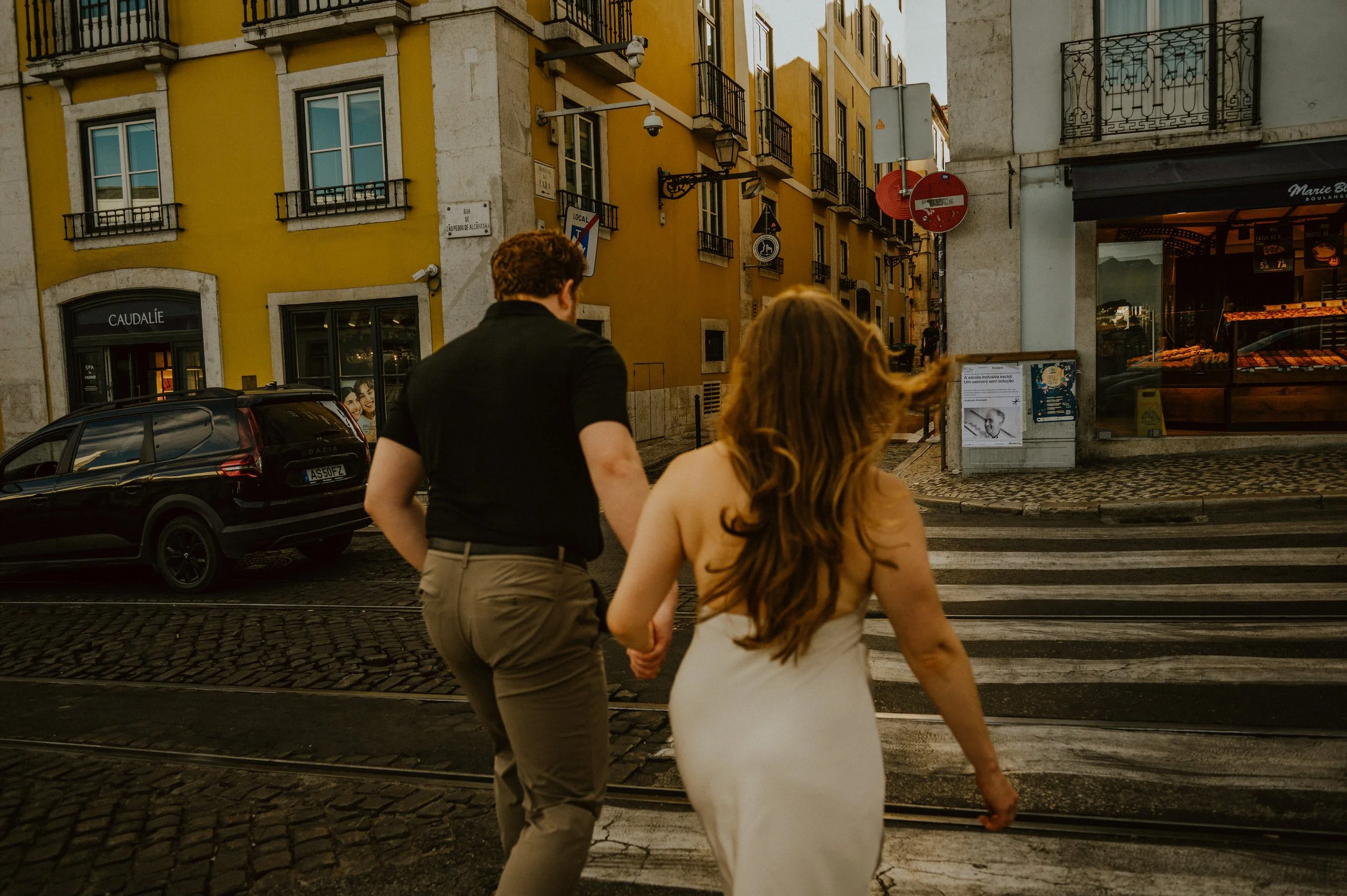
None of the above works if you cram it into two days with a spreadsheet and a tight schedule. The real answer to “how to spend time in Lisbon as a couple” is to intentionally pick fewer neighborhoods and give each one more time so you can actually experience each one instead of just ticking them off of a list. Eating a long lunch and letting it run into the afternoon, getting lost on purpose at least once, leaving one entire day with nothing booked and just seeing what you actually want to do with each other when nobody's telling you what's next.
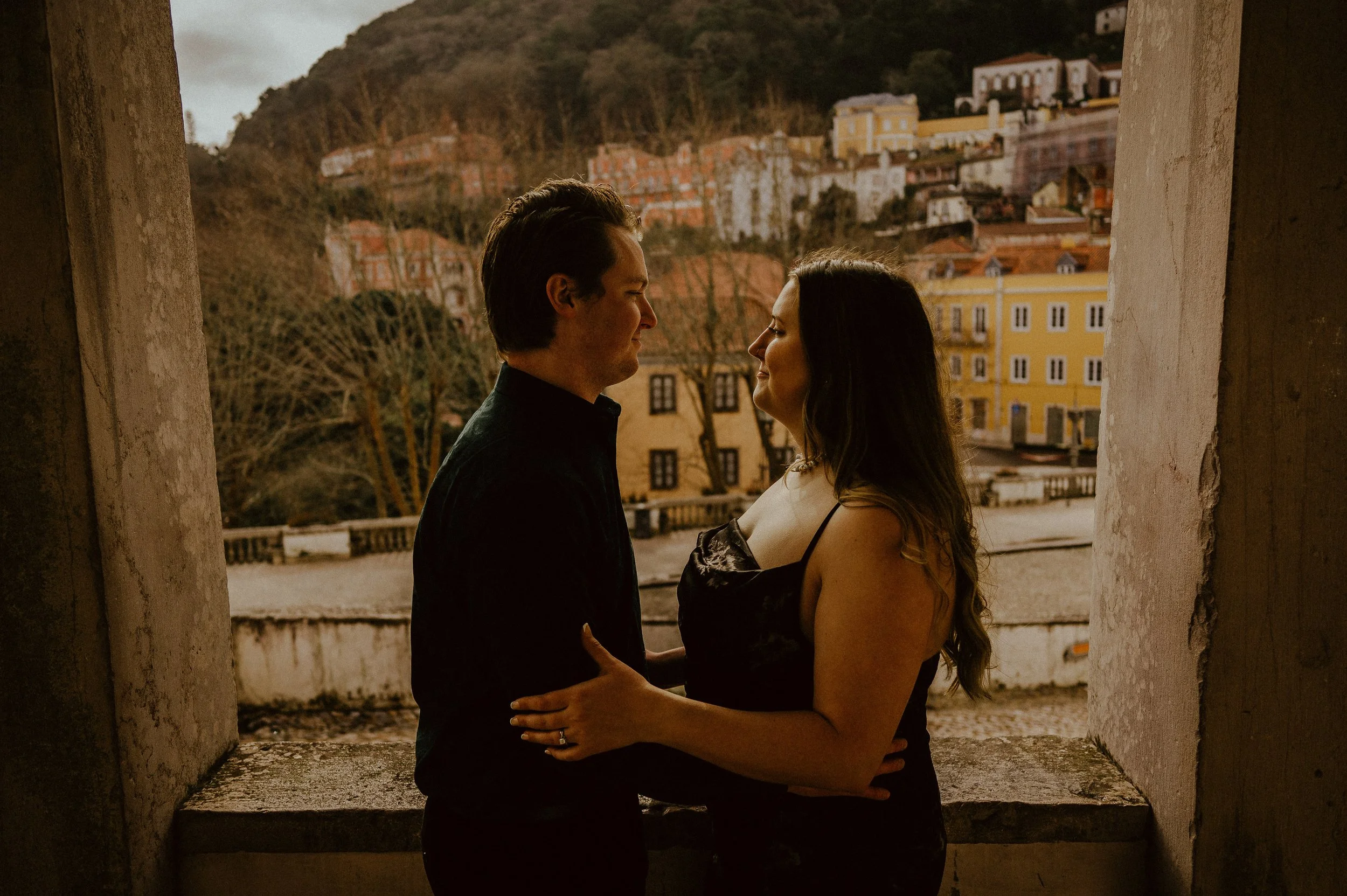
This is what Lisbon rewards, structurally. It is a city that resists rushing with its cobblestones, hills, and a culture that treats a two-hour lunch as normal rather than indulgent all conspire to slow you down whether you plan for it or not. As someone who serves couples from all around the globe I can tell you that the ones who leave saying the trip changed something between them are almost never the ones who saw the most of the city itself but rather the ones who gave themselves room to actually be together in it and prioritised being present with each other instead.
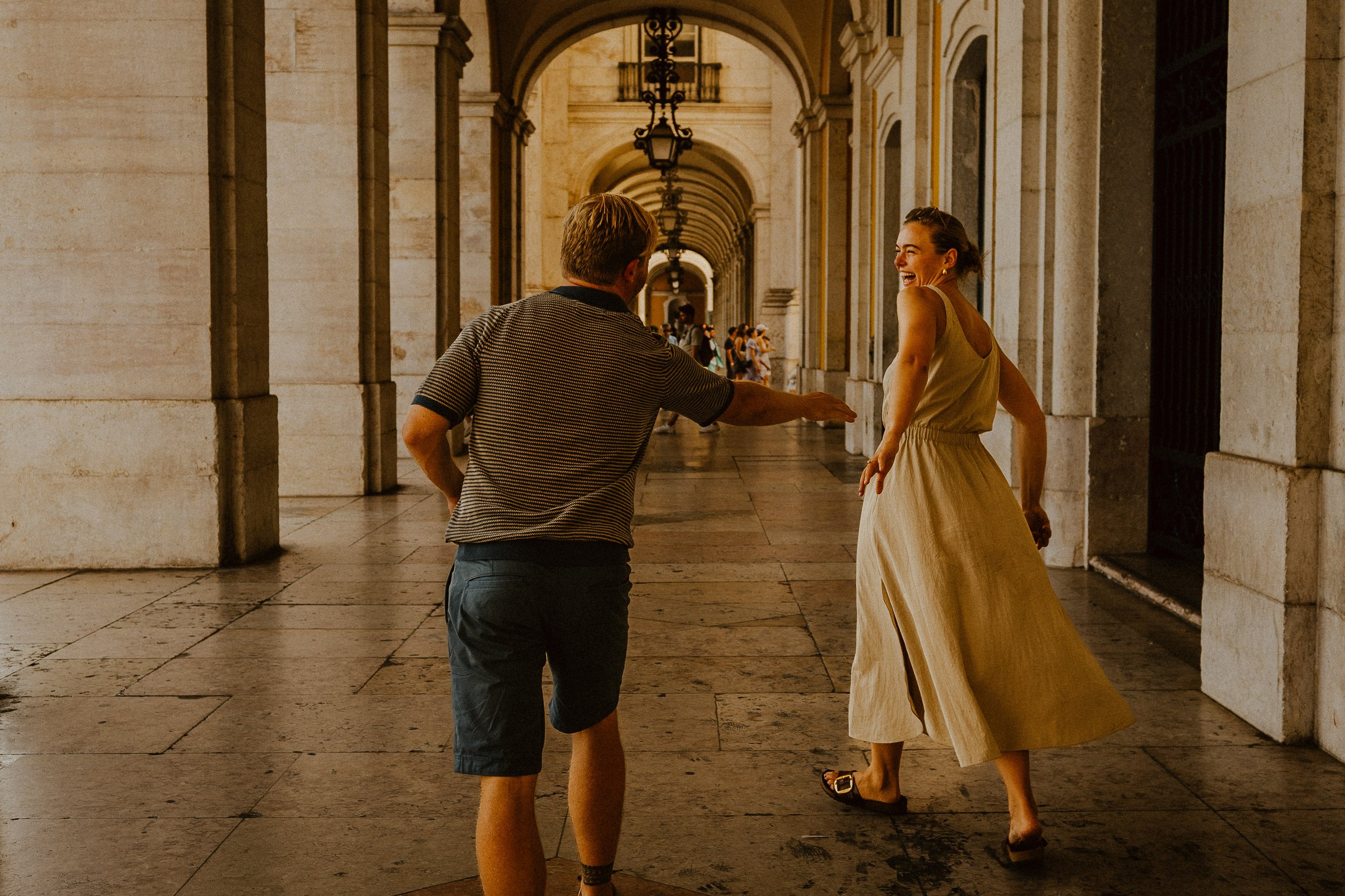
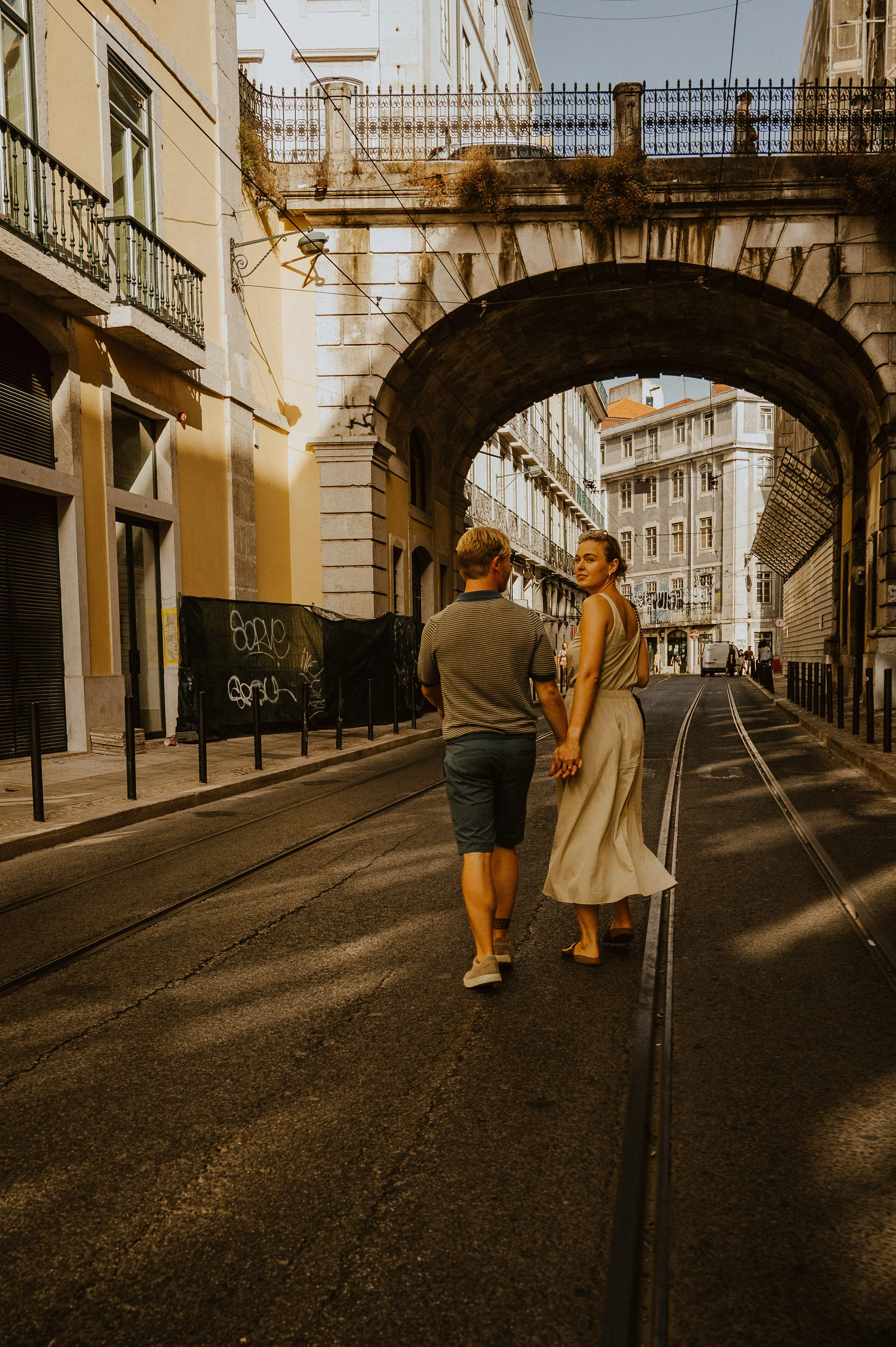
That idea that time together, unhurried and undirected, is worth more than any list of sights is more or less the whole philosophy behind what I do here in Lisbon. If you're the kind of couple who reads this far into a travel guide looking for something other than a checklist, you might also be the kind of couple who'd want an afternoon here designed entirely around the two of you: a pre-planned but unscripted experience, conversation starters instead of stiff posing, a route through the city built from what you actually told me about each other instead of all-the-same instagramable trendy spots, with photographs as the natural result rather than the whole point of it. If that sounds like your kind of afternoon, you can read more about how it works here. Hope to meet you soon!
FAQ
-
There isn't one single best neighborhood, it depends on your pace.
Alfama and Graça are best for wandering and sunset views. Príncipe Real suits a slower, relaxing afternoon with books and wine. Cais do Sodré works well for an evening out that isn't too loud. Most couples do best picking two or three and giving each real time rather than trying to cover the whole city.
-
Yes! Lisbon's hills, light, and unhurried food culture make it naturally suited to slow travel as a couple. A weekend is enough to properly experience two or three neighborhoods if you resist the urge to over-schedule it.
-
Three to five days gives you enough time to slow down without rushing between neighborhoods. Two days works if you accept you'll only really get to know one or two parts of the city well, which is often better than seeing all of it quickly.
-
No. Lisbon's center is walkable, and the hills mean the tram and funiculars are part of the experience rather than an inconvenience. A car adds stress in a city built on narrow, steep streets with expensive public parking. There are also many buses and the underground to quickly get you where you might wish to go!
-
Fewer neighborhoods, longer visits, meals that aren't rushed, and at least one day with nothing booked. It means choosing depth and meaning over a checklist and sitting somewhere long enough to notice it, rather than photographing it and moving on.
In short, the best things to do in Lisbon as a couple are less about a list of sights and more about how much unhurried time you give each other while you're there. Pick a few neighborhoods, walk more than you plan, and leave room for the parts of the trip that don't show up on any itinerary but are the ones really worth living, together.
With love,
Patricia, your romantic high-intentional experiences designer and photographer
Related Articles



About the Author:
Patricia Nunes is a couples photographer, experiences designer and the creator of the "Intentional" newsletter. She specializes in helping discerning couples build more intentional lives and relationships, using expertly guided photography experiences as a powerful tool to facilitate profound connection.
Lisbon, London and beyond.

A slow-travel guide to things to do in Lisbon as a couple, neighborhood by neighborhood, written for two people who'd rather experience a city with intention than just tick it off of a checklist.